
You probably don’t know how small, well-structured journals can reshape your daily calm in ways you’ll notice only after a few weeks. These six options blend CBT prompts, mindfulness practices, and mood tracking into portable kits you can carry anywhere. Each offers grounding activities, weekly mood calendars, and reflection pages crafted for on-the-go resilience. If you’re curious about simplifying stress management with a proven routine, you’ll want to see which fits your lifestyle best.
Key Points
- Features CBT prompts, daily mood tracking, and guided mindfulness for consistent daily calm across 90–91 days.
- Compact, discreet designs (A5, black/purple eco-leather covers) with travel-friendly features like ribbons, pockets, and pen loops.
- Eco-friendly materials (RPET/eco-leather) and sustainable covers appeal to environmentally conscious buyers.
- Includes structured layouts, goal tracking, and weekly reflections to identify patterns and build lasting habits.
- Money-back guarantees (60-day) and comprehensive inclusions (journaling layouts, guides, stickers) for confident gifting and use.
90-Day Mental Health Journal: Mindfulness & Self-Care
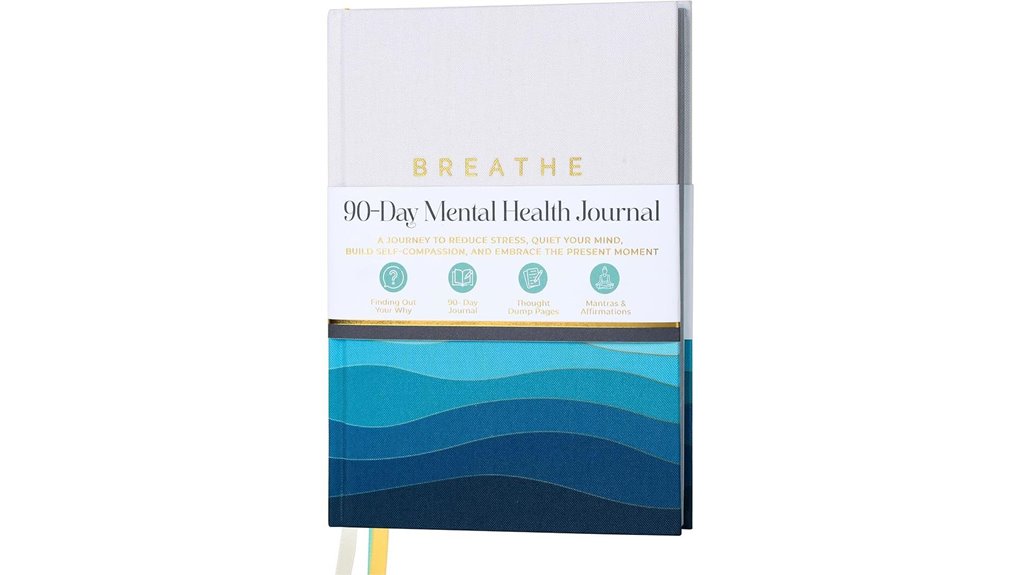
If you’re seeking a practical, no-fluff approach to daily calm, the Day Mental Health Journal stands out with its 90-day structure and guided prompts designed for anxiety relief, self-care, and mindful living. You’ll find daily full-page writing space for genuine self-reflection, plus grounding activities and weekly mood check-ins to spot patterns. The eco RPET cover signals a greener approach, linking mental health to Earth’s well-being. Created by a mental health advocate, it aims for a connection with your higher self. With mantras, a QR-delivered guided meditation, and discreet, premium design, it travels easily and supports consistent daily practice.
Best For: Individuals seeking a practical, guided 90-day mindfulness journal with eco-friendly design and structured prompts to reduce anxiety and improve self-care.
Pros:
- Full-page daily writing space with guided prompts supports genuine self-reflection and consistency.
- Eco-friendly RPET cover highlights a sustainable approach and connection between mental health and Earth well-being.
- Additional features like grounding activities, weekly mood check-ins, mantras, and QR-coded guided meditation add practical tools for daily practice.
Cons:
- 90-day commitment may be challenging for those seeking shorter or more flexible journaling options.
- Full-page daily entries can be time-consuming for very busy schedules.
- Some users may prefer more open-ended journaling without guided prompts or structure.
Mental Health Journal: 91-Day Guided Self-Care Journal
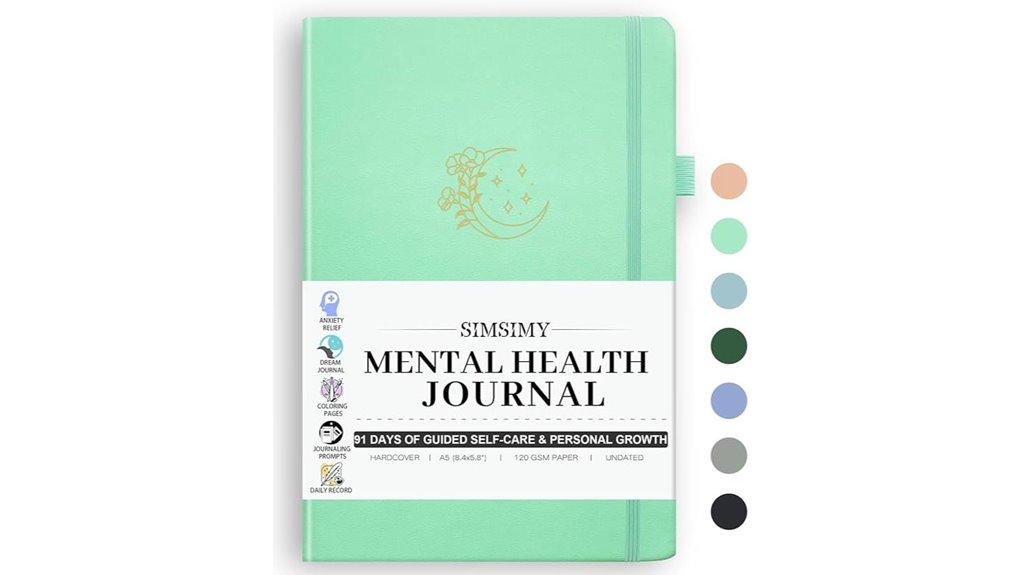
Designed for those seeking structured, CBT-based support, the Mental Health Journal: 91-Day Guided Self-Care Journal guides you through a precise 91-day path with six core sections—from goal setting and anxiety management to self-compassion and dream analysis—making it a standout choice for anyone prioritizing measurable mood tracking and practical self-care routines. You record goals, diet, sleep, emotions, and activities daily, with weekly reflections to monitor progress. The journal features CBT-based wellness planning, triggers tracking, and mood calendars, plus 40+ layouts, dream journals, coloring pages, and therapeutic activities. Its compact A5 design suits regular use and thoughtful gifting.
Best For: Those seeking a structured, CBT-based self-care routine and measurable mood tracking in a compact, giftable 91-day format.
Pros:
- CBT-based framework with daily tracking of goals, mood, sleep, diet, and activities
- 6-core sections plus 40+ layouts, dream journals, coloring pages, and therapeutic activities
- Durable A5 design with high-quality paper and practical features (ribbon bookmarks, pen loop, back pocket)
Cons:
- 91 days may feel short for long-term mental health goals for some users
- May be more intensive for beginners new to CBT concepts
- Limited space on daily entries for extensive notes or journaling for highly reflective individuals
Guided Anxiety Journal for CBT & Mindfulness Prompts
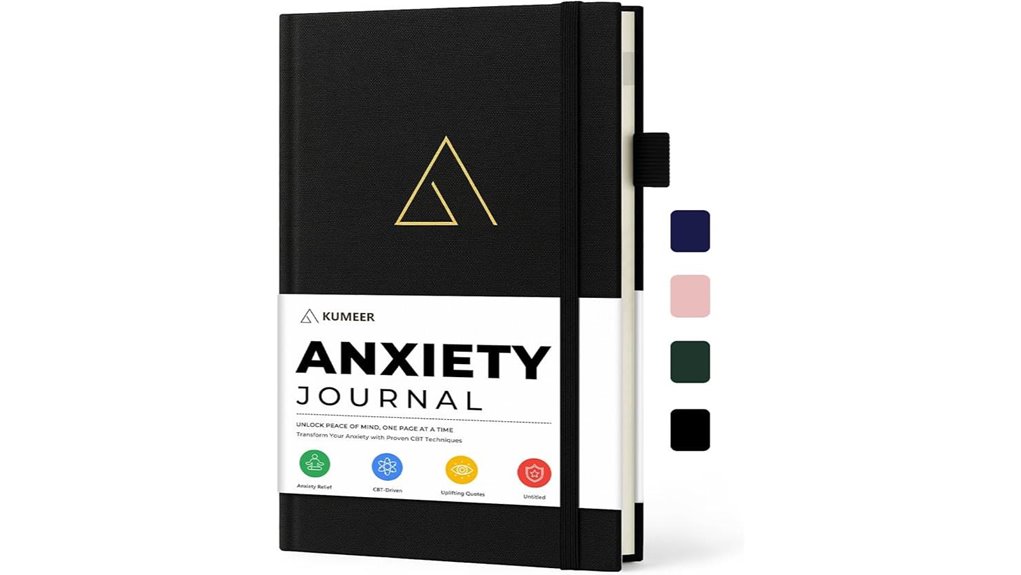
The Guided Anxiety Journal for CBT & Mindfulness Prompts stands out for anyone seeking structured, science-backed tools to curb daily anxious thoughts. You’ll use CBT techniques and repetitive mindfulness prompts to identify emotional triggers, reframe negative thoughts, and foster calm. Designed for women and men, it’s stylish yet discreet with an untitled cover for confidentiality, ideal at home, work, or on the go. Its compact, travel-friendly build includes a pen loop, elastic closure, ribbon bookmark, and back pocket in a premium linen cover with gold foil. Backed by science, daily exercises build resilience and cultivate lasting mindful routines.
Best For: Individuals seeking structured, science-backed CBT and mindfulness practices to reduce daily anxiety and develop lasting calm, in a discreet, portable journal.
Pros:
- Evidence-based CBT techniques paired with repetitive mindfulness prompts for consistent practice
- Discreet, stylish design with untitled cover and premium linen material for confidentiality
- Compact, travel-friendly features (pen loop, elastic closure, ribbon bookmark, back pocket)
Cons:
- 91 pages may feel sparse for users needing longer-term, more intensive journaling
- 8.2 x 5.7 inches may be small for users who prefer larger writing space
- Not a hardcover; may wear more quickly with heavy daily use
Worry for Nothing: Guided Anxiety Journal for All
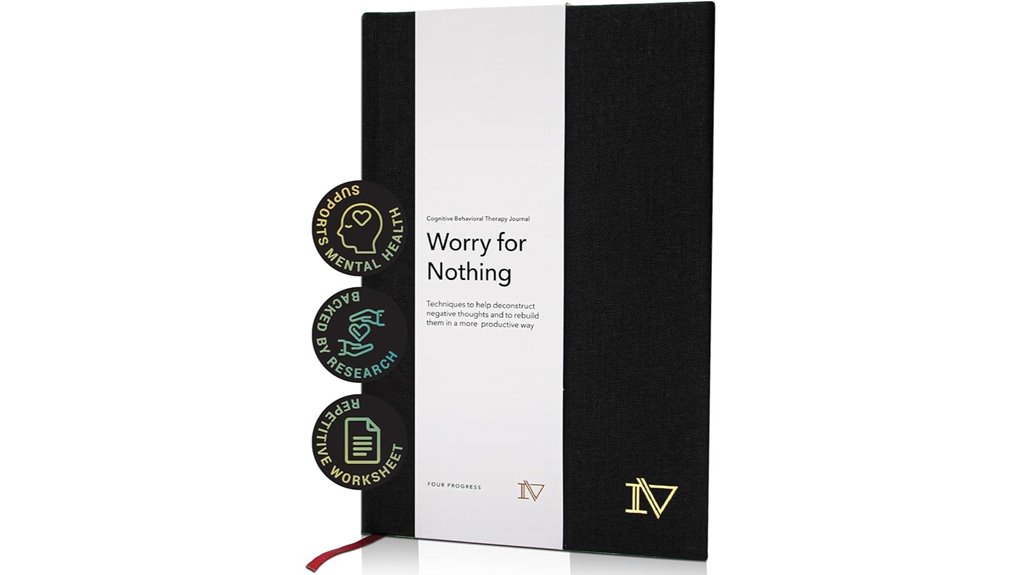
Looking for a discreet, CBT-backed tool to tame daily anxiety on the go? Worry for Nothing guides you with 60 two-page CBT worksheets designed to build mental resilience. You’ll track worries, sensations, and triggers, then evaluate evidence for and against automatic thoughts to regain control with constructive thinking. The journal aligns with therapy-based CBT, helping you own thoughts and reduce stress, while supporting daily habit-building through repetitive prompts. Its sleek, black linen cover and compact size keep it discreet on travel or at your desk. Ideal for both men and women seeking practical, evidence-based self-care. 9.9 ounces, 8.66 x 6.06 x 0.63 inches.
Best For: Individuals seeking a discreet, CBT-based, portable tool to manage daily anxiety and build lasting coping habits.
Pros:
- Evidence-based CBT prompts designed to guide reflection, evidence evaluation, and constructive thinking
- Compact, discreet design with a stylish black linen cover and portable dimensions for travel or bedside use
- Habit-building format with 60 two-page worksheets to support routine development and on-the-go practice
Cons:
- 60 two-page worksheets may require a commitment to regular use to see measurable results
- No digital companion or app included (physical journal only)
- May be less suited for those preferring mindfulness-only approaches over CBT-style exercises
JUBTIC Guided Anxiety Journal with CBT Prompts
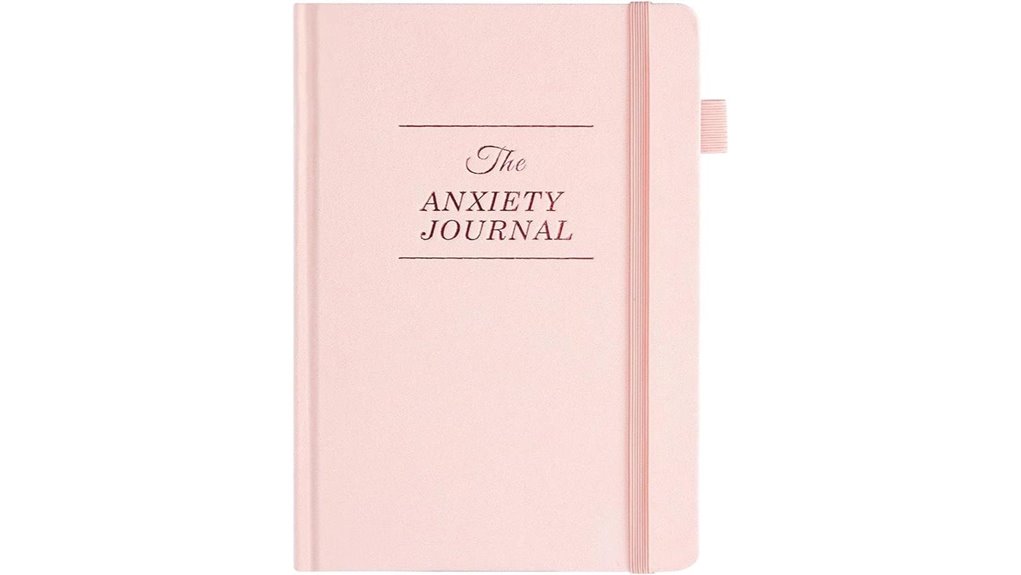
If you want a focused, CBT-backed route to calmer days, the JUBTIC Guided Anxiety Journal stands out for anyone who prefers structured, repetitive prompts to build lasting coping habits. This journal uses CBT and mindfulness to help you identify emotional triggers, reframe negative thoughts, and support overall mental health. You’ll cultivate coping strategies, reduce anxiety, and form lifelong wellness habits with daily exercises, prompts, and repetitive worksheets that keep you grounded, calm, and focused. It features CBT prompts for reflection on situations, feelings, and thoughts, plus tools to reframe thoughts into balanced perspectives. Durable linen hardcover, compact size, and a 60-day guarantee seal its practicality.
Best For: Individuals seeking a CBT- and mindfulness-based, structured journaling routine to identify triggers, reframe thoughts, and build lasting coping habits.
Pros:
- Repetitive CBT prompts reinforce coping skills and resilience over time.
- Portable, travel-friendly design with durable linen cover and practical features (ribbon bookmarks, pen loop, pocket).
- 60-day money-back guarantee offers risk-free reassurance.
Cons:
- May require consistent commitment to see long-term benefits.
- Some users may prefer non-CBT or less structured journaling formats.
- Paper thickness and ink compatibility may influence note-taking options for heavy writers.
Clever Fox CBT Journal for Anxiety & Stress (Purple)
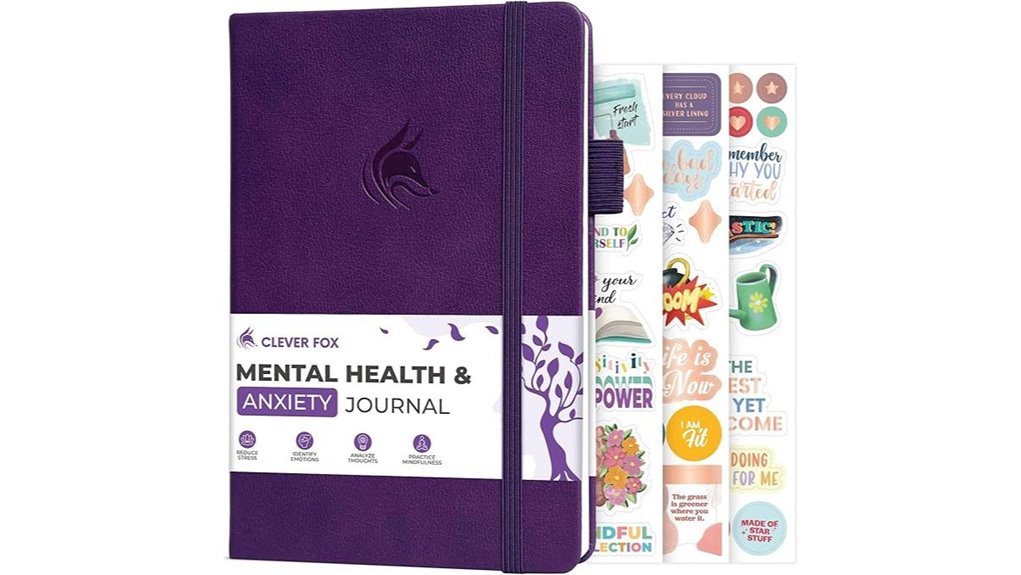
If you want a compact, CBT-guided tool to calm daily anxiety, the Clever Fox CBT Journal for Anxiety & Stress (Purple) fits the bill with its structured prompts and emotion tracking in a sleek A5 format. This purple, eco-leather cover journal uses 120GSM paper, a pen loop, and elastic for portability. It guides you to identify triggers, track moods, and transform irrational thoughts into balanced ones through CBT prompts, building practical coping strategies. Included is a daily journaling layout, stickers, and a user guide, plus a 60-day money-back guarantee. It’s designed for discreet, everyday stress relief.
Best For: Individuals seeking a compact, CBT-guided journal to manage daily anxiety and stress with structured prompts, mood tracking, and coping strategies in a portable A5 format.
Pros:
- Structured CBT prompts to identify triggers and transform irrational thoughts into balanced ones
- Portable A5 size with eco-leather purple cover, 120GSM paper, pen loop, and elastic for convenience
- Includes daily journaling layout, stickers, user guide, and a 60-day money-back guarantee
Cons:
- Limited to a 60-day framework; may not suit long-term journaling needs without additional copies
- Daily prompts and stickers may be less appealing to users preferring minimalist, unguided journaling
- Might be more suitable for self-guided use rather than structured therapy requiring professional oversight
Factors to Consider When Choosing Stress Relief Journal Daily
When you pick a stress-relief journal, consider its material and eco impact to align with your values, plus how the daily prompts are structured for quick, consistent use. Think about whether you want CBT or mindfulness guidance, and how portable and sized it is for your routine. Finally, check the privacy, design, and how the cover and pages feel to ensure you’ll actually reach for it every day.
Material And Eco Impact
Choosing a stress-relief journal with eco-friendly materials matters, so look for covers made from recycled or sustainable sources like ocean-plastic or eco-leather to cut environmental impact. You’ll want thicker stock, around 120gsm, to minimize bleed-through and extend usability without waste. Check certifications or commitments to greener production, such as FSC-certified paper or responsible sourcing, so your daily notes don’t compromise forests. Consider packaging practices and whether the product emphasizes a circular lifecycle or recyclable components, reducing end-to-end footprint. Evaluate whether the journal’s design cuts waste, like refillable or compact formats, which lower your daily carbon footprint. By prioritizing these material and production details, you support sustainability without sacrificing durability or usability in your daily calm routine.
Daily Prompt Structure
Daily prompt structures should balance guidance with flexibility, helping you track mood, identify triggers, and reflect on daily events without feeling forced. You’ll notice prompts that mix CBT-based items, mindfulness cues, and grounding exercises to build coping skills through daily entries. Expect sections for mood tracking, trigger identification, and reflection on thoughts or events from the day, all designed to illuminate patterns over time. Formats rotate between open-ended prompts, Likert-scale mood check-ins, and brief actions or mantras for immediate relief. Some journals pair prompts with companion activities like dream journaling, colouring pages, or weekly reflections to reinforce learning. This structure supports consistent practice, gradual emotional regulation, and clearer insight into what moves your mood day to day.
CBT Or Mindfulness Focus
If you’ve been weighing daily prompts for mood tracking and trigger awareness, you’ll want to pick a focus that aligns with how you cope in the moment. CBT-focused journals guide you to identify triggers, challenge automatic thoughts, and reframe them into balanced perspectives through structured worksheets. Mindfulness-focused journals emphasize present-moment awareness, grounding exercises, and nonjudgmental observation of thoughts and feelings. CBT methods use evidence-based prompts to evaluate beliefs against evidence, reducing cognitive distortions and improving coping strategies. Mindfulness approaches prioritize experiential practices—breathing, body scans, grounding—to reduce rumination and increase emotional regulation. Some journals blend both CBT and mindfulness, offering a multidimensional routine that supports cognitive reframing alongside mindful awareness for daily calm. Choose based on whether you crave cognitive clarity or steady experiential calm.
Portability And Size
Portability and size matter because you’ll want a stress-relief journal that travels with you. Choose a compact journal (around A5 or smaller) to fit easily in purses, backpacks, or pockets for on-the-go use. Look for lightweight construction without sacrificing durability, such as a sturdy hardcover and premium paper that doesn’t bleed with common pens. Consider clip-on features like elastic closures, pen loops, and back pockets to keep essentials organized while traveling. Prioritize portability by checking weight; a lighter journal (approximately 9–15 ounces) is easier to carry daily. Ensure the format supports single-handed writing and quick daily entries, with lay-flat binding or spiral options that facilitate on-the-go use.
Privacy And Design
Privacy and design matter because you want a stress-relief journal that stays discreet while still feeling personal. To protect privacy, choose untitled covers or discreet designs that don’t broadcast the purpose of your journal. Opt for portable, compact dimensions like A5, so you can use it privately at work or while traveling. Hidden or non-specific branding helps maintain confidentiality and reduces stigma when shared or left in common spaces. Premium, discreet materials—linen or eco-leather with minimal embossing—balance aesthetics with low visibility of content. Inside, privacy pockets and layouts that minimize visible writing when closed further safeguard daily reflections. Together, these design cues let you journal honestly without signaling private thoughts to others.
Tracking Capabilities
Tracking capabilities matter because you want a journal that not only records daily feelings but also reveals patterns over time. Look for daily entries or prompts that track mood, anxiety levels, and physical sensations to build a consistent data trail. Favor formats with weekly reflections or dashboards that summarize data into patterns and trends you can act on. Ensure clear scales or categories, like mood ratings, energy, and sleep quality, so tracking stays reliable. Check for integrated trackers that log triggers, coping strategies used, and outcomes to connect events with emotional responses. Prioritize portability—compact size, durable binding, and thick 90–120gsm paper—to preserve entries without bleed-through while you’re on the go.
Additional Creative Tools
Creative tools can boost engagement and resilience, so look for journals that pair dream journals, coloring pages, and CBT-inspired prompts. You’ll benefit from guided prompts and repetitive CBT worksheets that reinforce coping skills over time. Coloring pages with inspirational quotes offer a low-pressure outlet for reflection and emotional regulation, while a monthly mood and habit tracking calendar gives you a clear visual method to spot patterns and triggers. Practical on-the-go use matters too, so choose journals with ribbon bookmarks, pen loops, and back pockets for organization. These extras support consistent daily practice without clutter. By combining creative outlets with structured tracking, you create a versatile, resilient routine that adapts to your changing needs.
Gift Potential And Value
Choosing the right stress relief journal for daily use isn’t just about content—it’s about value you’ll notice every day. A CBT-based structure, daily prompts, and bite-sized exercises boost gift potential by supporting ongoing stress relief and resilience building. Discreet covers and portable sizes make it a thoughtful, private gift for home, work, or travel. Eco-friendly materials, like recycled or sustainable covers, appeal to givers who prioritize environmental values. Look for extra value through mood tracking, habit calendars, color-coded sections, and practical inclusions such as ribbons, pockets, and bookmarks. A clear return policy (30- or 60-day) increases gifting confidence, offering post-purchase satisfaction options. Together, these features enhance daily usability, shareability, and long-term appeal in any gifting scenario.
Common Questions
How Durable Are the Journal Covers Under Daily Use?
Your journal covers are generally durable under daily use, especially those with PU leather or coated fabric. Expect abrasion resistance from well-made bindings, reinforced corners, and stitched spines to survive year-long handling. Thicker cover boards protect against dents, and some designs use protective laminates that resist moisture. Regular care helps: avoid heavy moisture, wipe promptly, and store upright. If you travel a lot, choose a model with edge guards and a robust elastic closure for extra longevity.
Do These Journals Include Prompts for Sleep Quality?
Yes, some of them include prompts for sleep quality. You’ll find sections asking you to track bedtime, wake times, and how rested you feel. These prompts help you spot patterns and unwind before bed. If you want, you can combine a sleep log with mood notes for deeper insight. Remember, consistent practice turns quiet nights into calmer days, like stars lining up to guide you. Choose a journal that fits your routine.
Are Digital Companion Options Available for Any Journal?
Yes, digital companion options exist for several journals. You’ll often find companion apps or cloud syncing, guided prompts, and mood tracking that pair with physical editions. Some platforms offer add‑ons like reminders, lockable notes, and searchable entries. Before buying, check compatibility with your device, offline access, and data privacy. If you want, I can list journals with strong digital companions and note their features.
Which Journals Track Mood Over Time Most Effectively?
You’ll find mood-tracking journals with built-in prompts, scalable charts, and easy daily logging track changes most effectively. Choose options that auto-aggregate mood scores, offer color-coded timelines, and let you tag events or sleep and activity. Look for apps or journals with weekly summaries and trend lines to spot patterns. Prioritize consistency by using the same mood scale, recording daily notes, and reviewing correlations with stressors to deepen insights over time.
Do All Journals Offer Refillable or Replaceable Pages?
Not all journals offer refillable or replaceable pages. Some have bound spines, others use punch-bound or modular systems, and a few let you add or swap inserts. If you’re chasing a journal you can reuse, look for “refillable,” “swap pages,” or “upgrade kit” in product specs. You’ll want a system that treats your mood data like seeds you can transplant, not a one-time bloom you must discard. Verify compatibility before you buy.
All Together
You’ll find these journals don’t erase stress, they gently redraw its edges. With mindful prompts and CBT guidance, you’ll learn to pause before reacting, reframe the moment, and refill your day with small, steady acts of care. They’re compact companions, ready for travel or desk-side hush. If worry lingers, these pages offer a kinder outlet—an invitation to tend your inner weather. The goal isn’t perfection, but a steadier, kinder climate for you.