
As you plan your 2026 recovery toolkit, consider the 10 best foam rollers that blend density, texture, and durability for real muscle relief. From compact travel options to full-back coverage, these picks cover deep tissue work, trigger-point release, and even vibration modes. Each has strengths for different regimes and budgets. Curious which model fits your routine and goals will determine how you structure your next session—and what you might try first to see results.
Key Points
- The list highlights foam rollers across densities (soft to high), sizes (12″ to 18″), and special features (vibration, multi-density grids) for targeted recovery.
- Includes options for deep tissue relief, gentle beginners’ use, and therapist-like relief to match training goals.
- Vibrating and multi-density models offer customizable intensity and coverage for back, shoulders, legs, and fascia.
- Travel-friendly picks (shorter 12–13″ rollers) balance portability with effective muscle access.
- Durable materials (EPP, EVA, PVC) ensure shape retention, longevity, and easy cleaning for year-round use.
Invincible Fitness 17″ EPP Foam Roller for Recovery
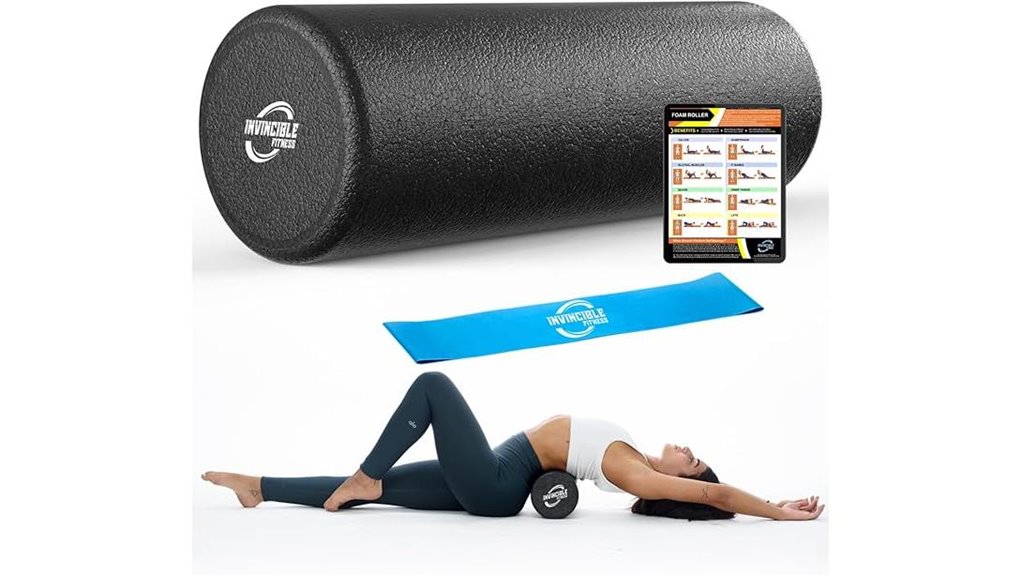
If you want a durable, travel-friendly foam roller that still delivers deep tissue relief, the Invincible Fitness 17″ EPP Foam Roller is a strong pick. Built from premium high-density EPP, it retains shape, stays long-lasting, and resists wear. For recovery, it delivers deep tissue massage, relieves pain, boosts flexibility, accelerates recovery, and reduces soreness while lessening tension. Its lightweight, compact design is travel-ready, easy to carry to the gym, yoga class, or home. It supports a stronger, healthier body and is versatile for back, legs, and arms, making it ideal for warm-ups, cooldowns, or rehab.
Best For: Those seeking a durable, portable foam roller that provides deep tissue relief and is suitable for full-body mobility, warm-ups, cooldowns, and rehab on the go.
Pros:
- Durable high-density EPP construction preserves shape and resists wear
- Deep tissue relief with reduced soreness and increased flexibility
- Lightweight and travel-friendly for gym, class, or home use
Cons:
- 17″ length may be less versatile for larger muscle groups or advanced users needing longer rollers
- May be firmer feel for beginners or sensitive users
- Limited color/style options could affect personal preference
High Density Foam Roller for Deep Tissue Massage (13″)
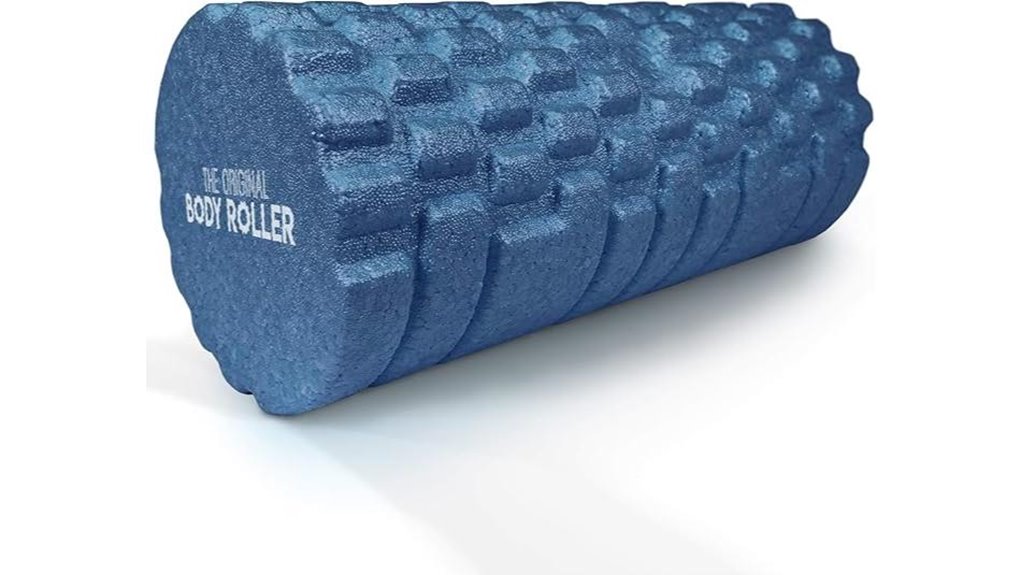
The High Density Foam Roller for Deep Tissue Massage (13″) offers a targeted deep-tissue experience with a dual-grid design that mimics fingers, thumbs, and palms for thorough release. You’ll use the 3D textured rollers (12.5 x 5.5 inches) with triple massage zones to address knots and adhesions, alternating between the finger ridges and spike bumps on opposite sides. Built with heavy-duty EPP, it’s durable for athletes yet comfortable for beginners. Use before and after workouts to condition tissue, relieve trigger points, and improve mobility. Ideal for back and leg muscles, runners, and recovery routines, delivering faster, effective relief.
Best For: Individuals seeking targeted deep-tissue release and mobility improvement for back and leg muscles, including runners and those new to self-myofascial release.
Pros:
- Dual-grid design with finger ridges and spike bumps for varied massage sensations and thorough trigger-point release
- Durable heavy-duty EPP construction suitable for athletes and beginners
- Portable 13″ size ideal for home use and travel, supports pre- and post-workout recovery
Cons:
- May be less comfortable for beginners who prefer gentler, non-textured rollers
- 13″ model may not cover large body areas as quickly as longer rollers (e.g., 17″ option)
- Some users might require guidance to maximize technique and avoid over-pressuring sensitive areas
TriggerPoint Foundation Roller: EVA Foam Muscle Recovery Roller
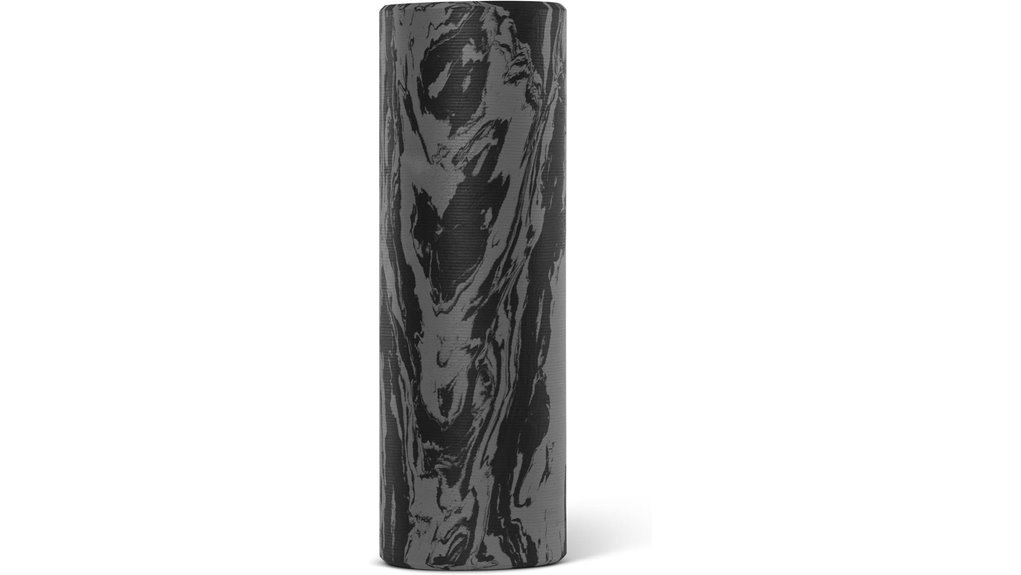
The TriggerPoint Foundation Roller stands out for its softer, EVA foam surface that cushions your skin while delivering effective muscle relief, making it an ideal pick if you want gentle, travel-friendly recovery without adding irritation. You’ll experience moderate compression that’s gentler on bare skin, with a soft-touch surface staying comfortable during use. This premium EVA foam roller maintains shape and effectiveness over time, featuring a solid-core design for durability. Available in 12 and 18 models, it targets small or large muscle groups and remains travel-friendly for workouts on the go. Designed for injury prevention through consistent recovery and flexibility work.
Best For: Athletes and recovery-focused individuals seeking a gentle, travel-friendly EVA foam roller for soft compression and comfortable skin contact.
Pros:
- Softer, gentle compression that cushions skin and reduces irritation
- Premium EVA foam with solid-core design for durable, long-lasting use
- Travel-friendly with two size options (12 and 18) for targeted or broader coverage
Cons:
- May be too mild for deep tissue or highly intense massage needs
- Limited to EVA foam feel, which some users may prefer firmer rollers
- Smaller sizes may require multiple passes for large muscle groups
Trigger Point Foam Roller for Muscle Recovery and Mobility
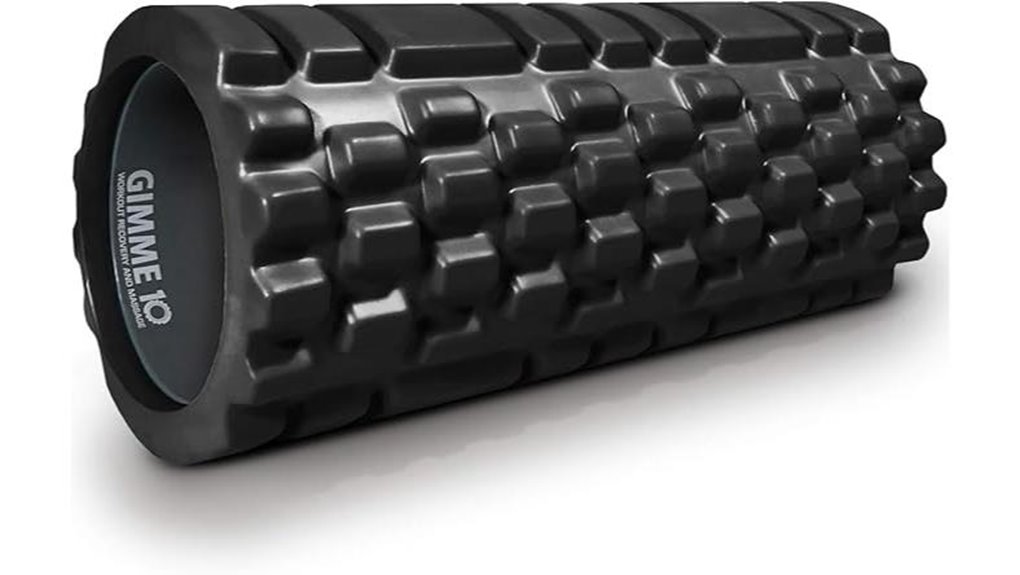
Looking for targeted relief that mimics a therapist’s touch? The Trigger Point Releasing Foam Massage Roller delivers medium compression for targeted muscle recovery and mobility. It uses 3 unique texture zones that replicate hands, fingers, and thumbs, so you feel precise pressure where you need it most. This patented design outperforms smooth rollers and comes with a 1-year warranty, ensuring top-tier quality. Suitable for workouts, stretching, and physical therapy, it supports up to 485 lbs, balancing comfort and support. It’s versatile for all body types, helping relieve tightness and improve circulation, mobility, and overall performance.
Best For: athletes, fitness enthusiasts, and physical therapy patients seeking targeted, therapist-like relief and improved mobility from a medium-density foam roller.
Pros:
- 3-zone textured design provides targeted pressure more effectively than a plain roller
- Patented construction with a 1-year warranty and claimed outperforming smooth rollers
- Supports up to 485 lbs, suitable for a wide range of body types and intensities
Cons:
- Medium compression may not suit those who prefer very firm or very soft rollers
- May be pricier than basic smooth rollers
- Texture zones could be uncomfortable for beginners adapting to deeper pressure
High-Density Foam Roller for Deep Tissue Massage (Orange)
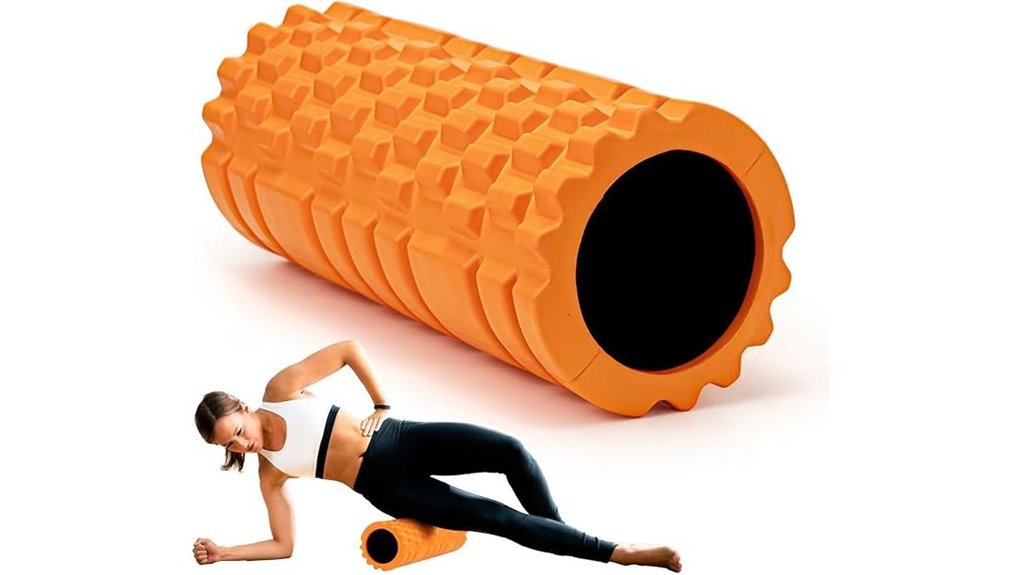
This High-Density Foam Roller (Orange) is the best pick for anyone seeking deep tissue relief thanks to its 13-inch size and patented grid design that mimics fingers, palms, and thumbs for precise trigger-point release. You’ll experience deep muscle massage and myofascial release, reducing soreness and stiffness. Its high-density PVC and EVA construction maintains shape under heavy use while delivering good cushioning and durability for home, gym, or outdoor sessions. Lightweight and sweat-proof, it’s easy to clean and transport in the included nylon bag. Suitable for runners, athletes, yogis, and swimmers seeking improved flexibility and mobility.
Best For: This foam roller is ideal for runners, athletes, yogis, and swimmers seeking deep-tissue relief, improved mobility, and targeted trigger-point release.
Pros:
- Mimics finger/palm/thumb design for precise trigger-point release
- High-density PVC/EVA construction maintains shape and durability
- Lightweight, sweat-proof, easy to clean, and comes with a portable nylon bag
Cons:
- 13″ length may be less suitable for very tall users needing broader back coverage
- May be intense for beginners or those with sensitive muscles
- Requires some familiarity to maximize benefits from the grid design
Amazon Basics High Density Foam Roller
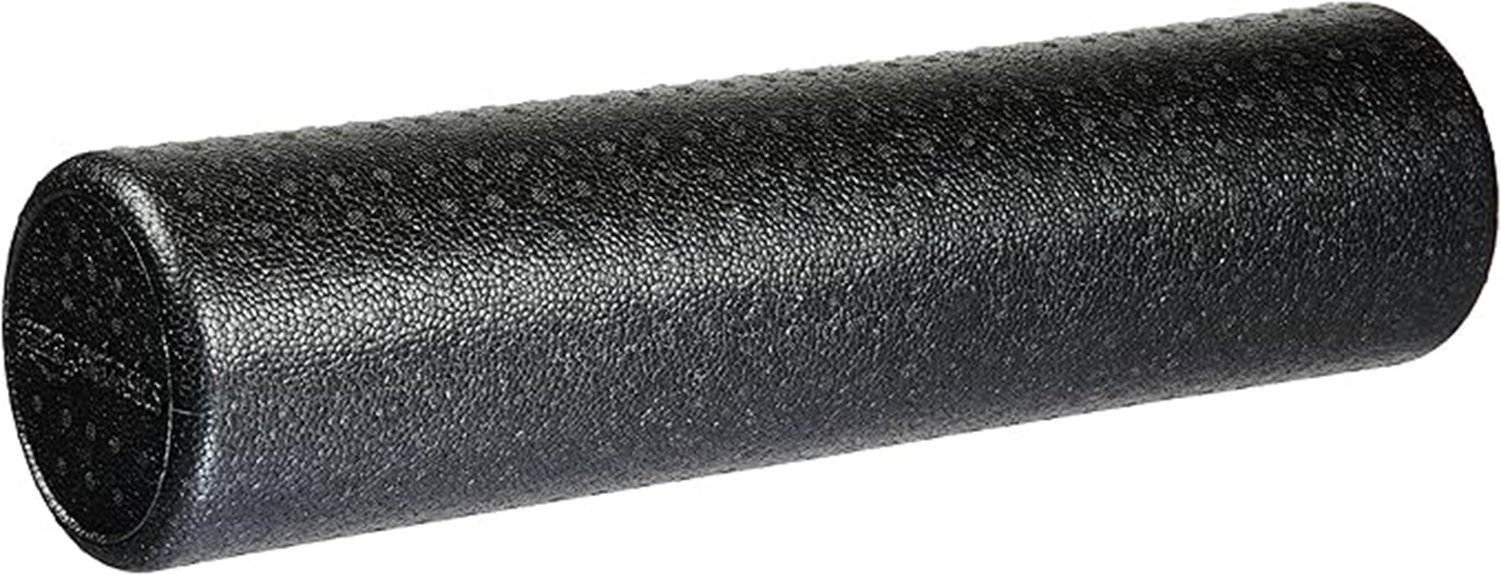
For a straightforward, budget-friendly option that still delivers solid durability, the Amazon Basics High Density Foam Roller stands out for beginners and casual gym-goers who want reliable support without breaking the bank. You get a black, high-density foam roller with a firm, durable polypropylene core that maintains its shape. Molded edges add comfort during stretches, balance drills, and mobility work. It’s ideal for improving flexibility, strength, and balance, and you can easily reposition it during workouts. Lightweight and portable, you’ll carry it to class and wipe it clean after sessions. Dimensions are 12 x 6 x 6 inches.
Best For: beginners and casual gym-goers seeking a budget-friendly, durable foam roller for balance, flexibility, and mobility work.
Pros:
- High-density foam provides solid support and durability
- Molded edges offer added comfort during stretches and mobility drills
- Lightweight and portable, easy to carry to class and reuse after workouts
Cons:
- Smaller size (12 x 6 x 6 inches) may be less comfortable for taller users or longer myofascial rolls
- Non-recessed surface may be less suitable for deep tissue massage compared to textured or grid rollers
- Polypropylene core, while sturdy, may feel firmer than softer foam rollers for some users
321 Strong Foam Roller: Medium Density Massager & eBook
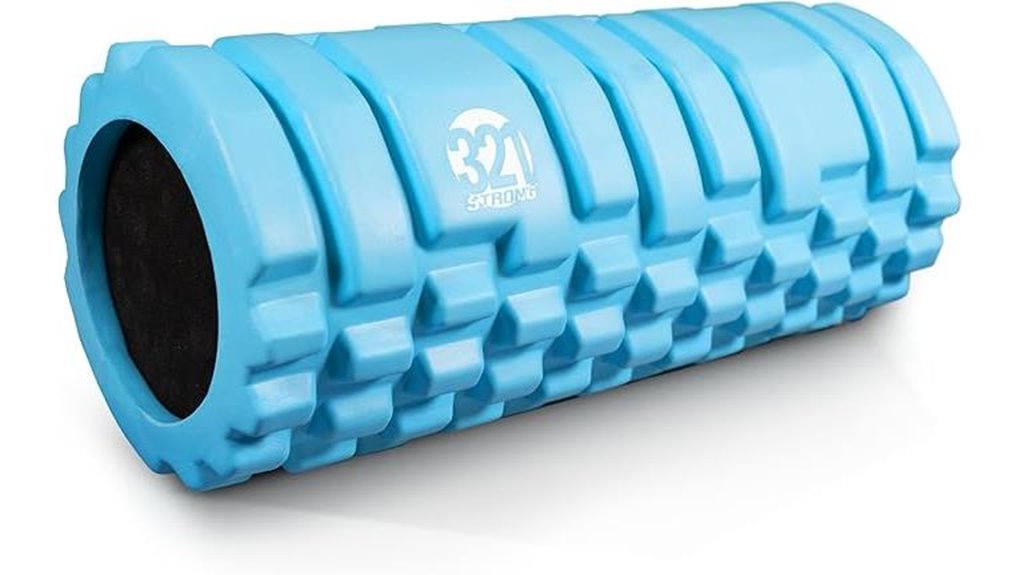
The Strong Foam Roller stands out for its medium-density design with patented, deep-penetrating projections that mimic a therapist’s hands, delivering targeted relief for knots and fascia. You relieve sore muscles through deep tissue massage and acupressure, while the roller targets painful adhesions and flushes lactic acid from tissue. It supports pre- and post-workout stretching, reduces recovery time, increases flexibility, and lowers injury risk. Constructed from textured, BPA-free closed-cell EVA foam with no hard plastic, it resists deformation and holds substantial weight. Three zones let you adjust intensity; a companion eBook guides your 20-minute sessions after exercise.
Best For: Athletes and fitness enthusiasts seeking deep-tissue relief, fascia release, and structured recovery routines after workouts.
Pros:
- Deep, targeted massage with patented projections that mimic a therapist’s hands
- Medium-density, BPA-free closed-cell EVA foam that resists deformation and supports substantial weight
- Three adjustable intensity zones plus an included eBook for 20-minute post-workout sessions
Cons:
- May require guidance to avoid excessive pressure on sensitive areas, especially around the spine
- Learning curve to effectively target knots and fascia with the projections
- Replacement or additional accessories are not mentioned; limited information on non-fitness use cases
FITINDEX Vibrating Foam Roller for Back Pain (5-Speed)
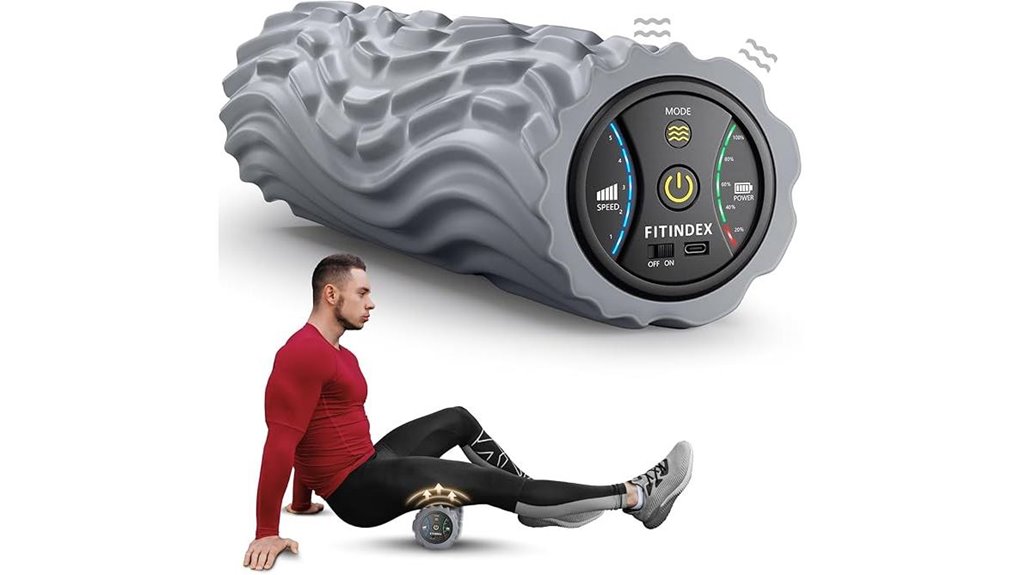
The FITINDEX Vibrating Foam Roller stands out for its 5-speed settings and high RPM range, delivering customizable vibration massage that targets the back and other muscle groups. You can use it before or after workouts for stiffness relief, yoga, or physical therapy, as it supports broad fitness routines. With 1500 to 3200 RPM and frequency conversion, you tailor the pressure to specific muscles or therapy needs. The 3-in-1 density waves cover shoulders, arms, neck, legs, back, and more, making it versatile for varied soft-tissue work. USB-C charging, ~5-hour full charge, and over 2 hours on max speed add portable convenience.
Best For: individuals seeking a versatile, portable vibrating foam roller for pre/post-workout recovery, back relief, and targeted soft-tissue work across multiple muscle groups.
Pros:
- Wide RPM range (1500–3200) with 5 intensity settings for customizable massage.
- 3-in-1 density wave patterns cover shoulders, neck, back, legs, and more for versatile use.
- USB-C charging with ~5-hour full charge and over 2 hours at max speed, plus travel-friendly size (11.4 x 4.7 inches, 3 lbs).
Cons:
- Higher-end price point may be a consideration for casual users.
- May be bulky for very compact travel needs compared to non-vibrating foam rollers.
- Requires power source (battery/charging) to use; not a passive, non-electrical roller.
Soft Density Foam Roller 36″ x 6″ – Green Marbled Recovery Roller
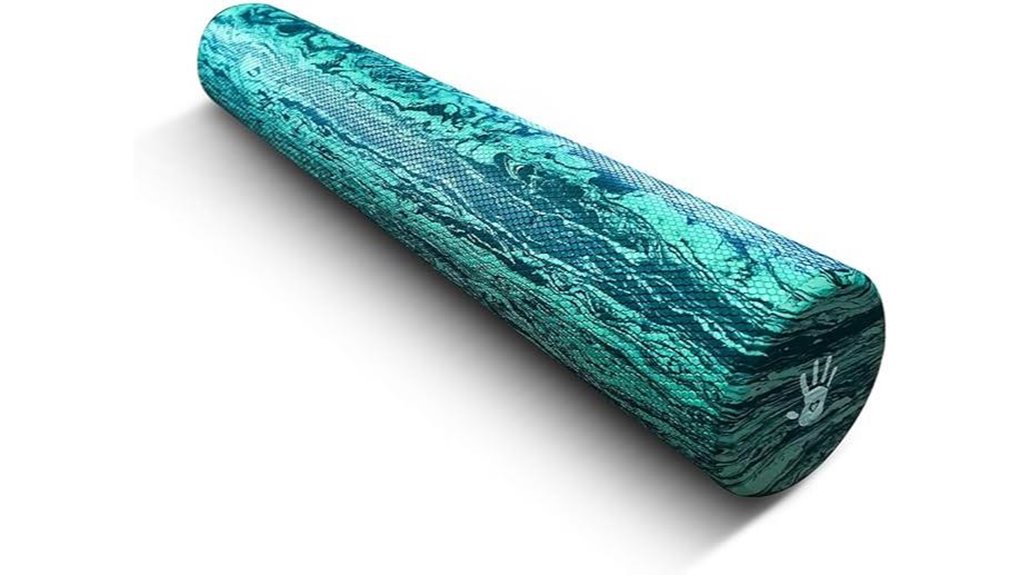
Designed for beginners and sensitive muscles, the Soft Density Foam Roller 36″ x 6″ – Green Marbled Recovery Roller provides gentle, low-intensity compression that eases soreness without aggravating injuries, making it a standout choice in the 10 Best Foam Roller list for 2026. This soft-density roller suits therapy and recovery, recommended by physical therapists and trainers for rehabilitation, Pilates, yoga, and daily exercise. It supports mobility, circulation, and flexibility while easing tension. Use it for full-body massage—back, hamstrings, quads, calves, IT band, and glutes—by rolling gently to release tight muscles and fascia, promoting myofascial release and recovery. Durable, easy to clean, portable, and built to last.
Best For: Individuals with sensitive muscles, beginners, and those rehabbing injuries who want gentle, low-intensity compression for therapy, recovery, and mobility.
Pros:
- Gentle compression suitable for beginners and sensitive muscles
- Durable, closed-cell foam that resists moisture and cleans easily
- Versatile for full-body massage (back, legs, IT band, glutes) and myofascial release
Cons:
- May be too soft for athletes requiring deeper tissue work
- Longer 36″ length can be cumbersome in small spaces
- Limited peak density may not satisfy those seeking intense pressure
Amazon Basics High Density Foam Roller
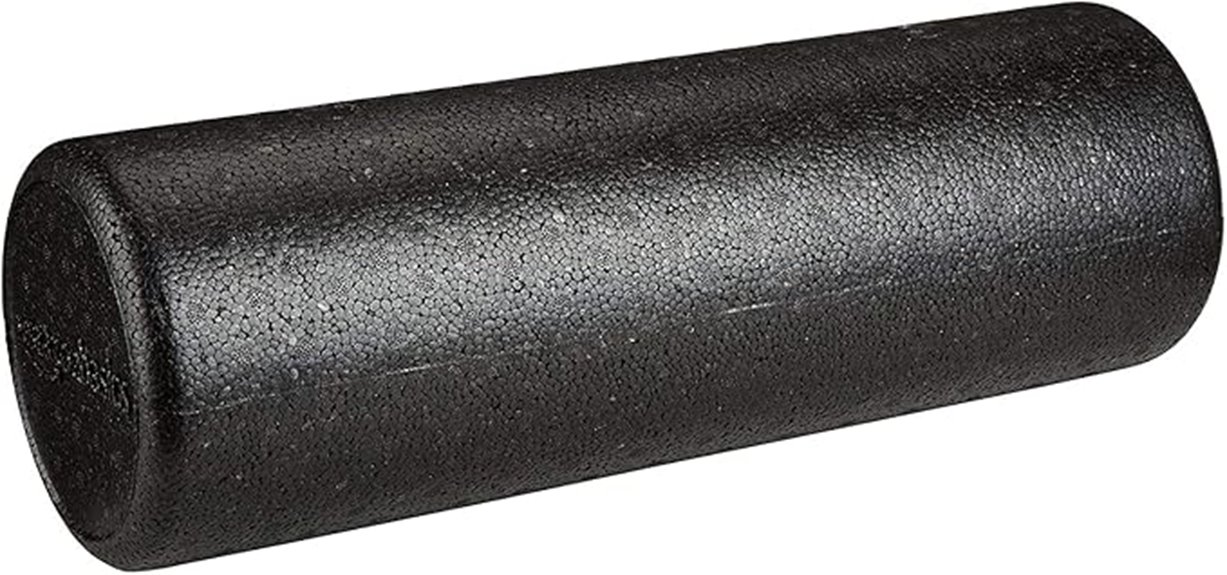
For a reliable entry-level option, the Amazon Basics High Density Foam Roller delivers firm, long-lasting support with its high-density construction that holds its shape through heavy use. You get a 18-inch roller in black, made from polypropylene, weighing about 0.27 kg (0.3 kg packaged). Its walled edges improve comfort during presses and rolls, while the rigid build stays consistent for balance, strengthening, and flexibility routines. Lightweight and easy to wipe clean, it travels well for class or home use. This model—18 Inches, HighDensity18—supports quick recovery without sacrificing durability or portability, ideal for beginners exploring foam-rolling fundamentals.
Best For: Beginners and individuals seeking an affordable, reliable 18-inch foam roller for balance, strengthening, and flexibility work.
Pros:
- Firm, durable high-density construction that maintains shape through heavy use
- Walled/molded edges for added comfort during presses and rolls
- Lightweight and portable, easy to wipe clean and travel with
Cons:
- Made from polypropylene, which may feel less cushioned than softer foam rollers for some users
- 18-inch length might be less suitable for taller individuals seeking longer rollers
- Basic entry-level model, may lack advanced texture or grip features found on higher-end options
Factors to Consider When Choosing Foam Roller Muscle Recovery
When you pick a foam roller, consider density and comfort so it fits your pressure tolerance and muscle targets. Check size for each body area, plan durability versus price, and match it to your use case, whether recovery, mobility, or warmups. Don’t forget portability and storage so you can take it on the go and keep your setup clean.
Density And Comfort
Density and comfort go hand in hand when choosing a foam roller. You’ll find options across density levels to match your goals. Higher density rollers provide firmer support and hold their shape longer, allowing deeper tissue compression without deformation. Medium-density rollers balance comfort and pressure, offering targeted relief with added durability over soft-density options. Soft-density rollers deliver gentler recovery and massage, reducing intensity for sensitive muscles or injury rehab. Some rollers feature multi-density textures or zones to vary pressure, mimicking hands and fingers for adjustable intensity. Durable EVA or EPP cores with reinforced surfaces sustain consistent compression over time, maintaining effective pressure during sessions. Consider how density affects your soreness, recovery pace, and tolerance to ensure steady progress.
Size For Body Areas
Choosing the right length depends on the body areas you’re targeting and how portable you need it to be. Shorter rollers, around 12–13 inches, target smaller muscle groups and stay highly portable for travel or precise spots. Longer options, 18 inches and up, cover larger areas like the back and legs more thoroughly. A 13-inch roller is commonly used for back and leg muscles, offering a balance between targeted pressure and broader coverage. For full-body coverage, an 18-inch roller provides extended contact length, addressing multiple muscle groups in a single pass. Two-length options (12/18 inches) exist to balance portability versus coverage, aiding your choice based on travel-friendliness or comprehensive treatment. Alignment matters: 12 inches suits forearms or calves, while 18 inches suits back or thighs.
Durability Vs Price
Durability often drives value more than sticker price when you’re choosing a foam roller for muscle recovery. Higher-density foam rollers, like EPP or heavy-duty builds, keep their shape longer, reducing replacements and potentially lowering your long-term cost. Price often reflects durability features—rugged construction, thicker walls, and multi-zone textures—so pricier models may offer lasting performance. Rollers with closed-cell materials resist moisture and sweat, boosting longevity and simplifying maintenance, which can improve value over time. Rechargeable or motorized features add upfront cost but don’t guarantee durability gains, affecting long-term cost-benefit. Look for warranty length and patent-backed designs, as these signals hint at lifespan and reliability, helping you assess how price aligns with expected durability.
Use Case Scenarios
Considering your goals helps narrow your foam roller choice: pre-workout prep benefits from moderate to firm density with textured surfaces that wake up tissues without over-compression, while post-workout recovery favors high-density rollers with multi-zone textures or spikes to reach deeper fascia and trigger points. For pre-workout, you’ll want a roller that mimics hands to improve tissue readiness without excessive compression. If you’re covering large muscle groups, opt for long, full-body rollers around 36 inches to efficiently address the back and hamstrings. When you travel, choose 12–18 inch, lighter options for on-the-go maintenance. Beginners or sensitive muscles benefit from soft-density or low-compression rollers to reduce injury risk while still aiding mobility and circulation. Balance density, texture, and size to match your routine and environment.
Portability And Storage
When you’re balancing your routine between home and travel, portability and storage become practical priorities. Many foam rollers are lightweight and compact, with sizes around 11–13 inches or 12–18 inches, so you can stash them at home or slip them into a gym bag. Travel-friendly features boost practicality, including carrying bags and soft-touch surfaces for comfortable transport. Smaller rollers, like 12-inch variants, offer precise targeting for trips, while longer 17–18 inch models cover broader areas on the go. Foldable or soft-density options further reduce bulk and fit tight spaces. Lightweight designs also let you reposition easily during workouts, speeding setup and making storage between sessions less of a hassle. Choose a model that matches your travel cadence and space.
Common Questions
How Long to Roll Each Muscle Group?
Aim for about 30 seconds per muscle group, up to 60 seconds if you’re releasing tight spots. Move slowly, pausing on tender areas for 1–2 seconds as you roll. Cover each muscle group in 1–2 passes, and don’t rush through your routine. If you feel sharp pain, ease off. Finish with gentle rolling on larger areas like quads, calves, and glutes to promote blood flow and range of motion. Hydrate afterward.
Can Foam Rollers Aid Injury Recovery?
Yes, foam rollers can aid injury recovery when used correctly. They help release fascia, improve blood flow, and ease muscle stiffness after acute injuries. Start gently, avoid painful rolling, and follow your clinician’s guidance for timing and pressure. Use slow, controlled sweeps over the injured area and target surrounding muscle groups to support rehab. Hydrate, breathe, and progress gradually to prevent aggravation. Stop if swelling, sharp pain, or redness appears.
Are Vibration Rollers Better for Soreness?
Yes, vibration rollers can help with soreness by boosting blood flow and reducing muscle tension. You’ll feel deeper relief in tight areas, often with faster warmups and improved range of motion. Use them after workouts or on rest days, but don’t Overdo it—start with short sessions and moderate intensity. For chronic pain or injuries, check with a clinician first. Combine with traditional foam rolling for balanced recovery. Stay consistent, listen to your body, and stay hydrated.
Which Density Suits Beginners Best?
Beginner-friendly density is medium (around 30–40 Shore). You’ll get enough give to avoid bruising, yet enough firmness to promote deeper tissue work. Start with a softer roller if you’re new to rolling, then progress to medium as you tolerate it. Move slowly, breathe, and avoid rolling directly on joints or bones. If you feel sharp pain, switch to a softer option or pause. Consistency beats intensity for steady improvements.
Should I Roll Before or After Workouts?
Roll before and after workouts to prime and recover. Picture your muscles waking up as you roll, then winding down as you finish. Before, use light to moderate pressure on major bands for 1–2 minutes each, dynamic moves, and breathing. After, roll tight spots 30–60 seconds, then stretch. You’ll improve range, reduce soreness, and keep performance consistent. Listen to your body, adjust intensity, and hydrate throughout.
All Together
You’ve got a solid lineup to choose from, whether you want deep tissue punch, travel-friendly options, or vibrating relief. Pick the density and size that fits your body, test the textures, and consider price-to-value. Don’t rush—the right roller should feel like a therapeutic teammate, not a chore. Like a well-tuned instrument, your recovery can harmonize with workouts, turning soreness into steady gains. Trust your instincts, and roll toward consistency.