
If you’re aiming to simplify nightly habits without losing insight, two standout journals in 2026 offer different vibes: a 91-day, science-backed planner from And Per Se that tracks sleep quality, meals, water, and mood with weekly reviews, plus a premium lay-flat design, and a portable 60-sheet Knock Knock pad that keeps it light with plain prompts for quick, consistent logging. Which approach fits your routine best might surprise you as you weigh depth against simplicity.
Key Points
- Subtopic 1’s And Per Se Wellness Journal offers a 91-day, undated, flexible planner with comprehensive health tracking and weekly reviews.
- Subtopic 2’s Knock Knock Sleep Routine Pad provides a simple, portable 60-sheet sleep tracker with plain ruling and no guided prompts.
- A strong sleep-tracking focus: record bedtime, wake time, duration, sleep quality, interruptions, and pre-bed routines for actionable insights.
- Routine consistency tips emphasize undated pages, a fixed nightly cue, daily core metrics, and weekly trend reviews.
- Design and usability priorities include lay-flat binding, ink-bleed resistant paper, compact 6 x 9 inches, and legible layouts.
And Per Se Wellness Journal: 91-Day Guided Planner

If you want a structured, science-backed approach to nightly routine habits, the And Per Se Wellness Journal’s 91-day guided planner is a standout choice. You’ll follow a guided system built on behavioral psychology, advancing from foundational habits to pattern recognition and sustainable mindset shifts. Daily steps remove guesswork, and you can start anytime because pages are undated and flexible. Track sleep quality, meals, water, exercise, emotions, and gratitude in one layout, with weekly reviews to spot trends and adjust routines. The lay-flat hardcover and premium materials resist ink bleed, making entries legible and gift-ready for any wellness journey.
Best For: Readers seeking a structured, science-backed 91-day wellness planner that supports habit formation with undated, flexible daily steps and comprehensive health tracking.
Pros:
- Comprehensive all-in-one tracker for sleep, meals, water, exercise, emotions, and gratitude with weekly reviews.
- Behaviorally grounded framework guiding users from foundational habits to sustainable mindset shifts.
- Undated, lay-flat hardcover design with premium materials for easy writing and gift-ready presentation.
Cons:
- 91-day cadence may require purchase planning beyond a single calendar year for those seeking multi-quarter use.
- Guided format may feel restrictive for individuals who prefer more freeform journaling.
- Some users may desire more digital integration or app compatibility to supplement offline entries.
Knock Knock Sleep Routine Pad: Soothing Sleep Tracker Checklist
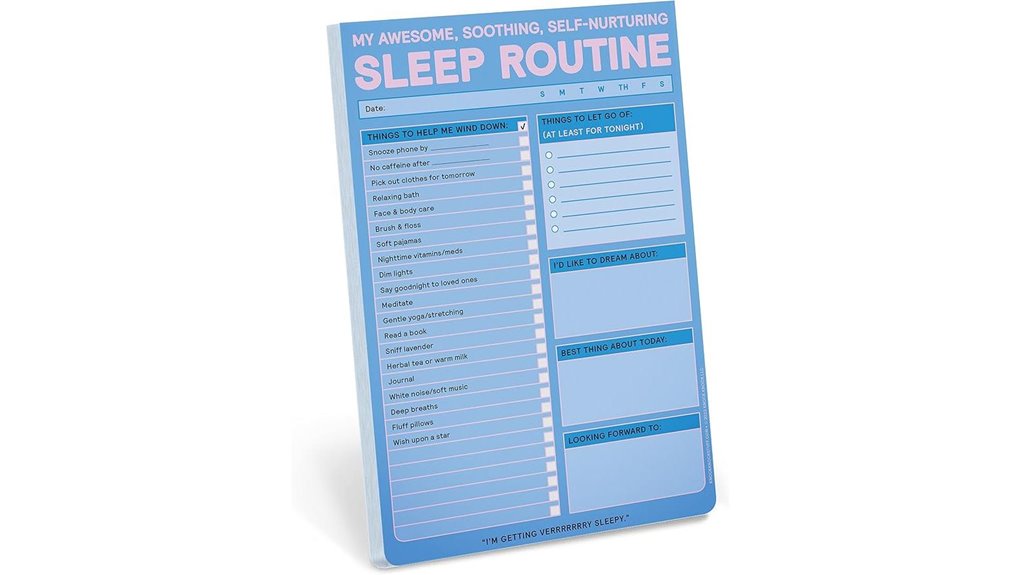
Looking for a lighthearted, practical sleep companion? Meet the Knock Knock Sleep Routine Pad, a soothing sleep tracker and checklist in a 6 x 9-inch pad. With 60 sheets, it’s lightweight at 8.6 ounces and easy to stash by your bed. This independent maker aims to add humor and smarts to your routine, putting function first with #knockknockstuff. You’ll find plain ruling on a sturdy cardboard cover, designed for daily entries that support a calmer night. Available since 2023, it ships with a straightforward return policy and dependable support if you need it.
Best For: Busy adults who want a lighthearted, practical sleep routine tracker to simplify winding down and improve nightly habits.
Pros:
- Simple, portable 6 x 9-inch pad that stays by the bed for easy daily entry
- 60 sheets provide a long-lasting, low-effort sleep tracking routine
- Humorous, smart branding from an independent maker adds personality without sacrificing function
Cons:
- Plain ruling may not suit users who prefer guided prompts or structured sections
- Only 60 sheets; may run out if used nightly for extended periods
- No digital integration or app compatibility mentioned for data tracking or analytics
Factors to Consider When Choosing Sleep Journal Nightly Routine
When you pick a sleep journal, consider the Sleep Track Details you want captured and how Routine Consistency Factors will support daily use. Think about Comfort and Materials for nightly handling, plus how the Layout and Prompts guide your reflections. Also weigh Portability and Durability to ensure it travels with you and lasts through the year.
Sleep Track Details
Tracking sleep details helps you spot what really moves your rest. Sleep track details usually cover bedtime, wake time, total sleep duration, and sleep efficiency to quantify your night. Some trackers add sleep stages—light, deep, REM—and note interruptions or awakenings to gauge quality. Tracking daily patterns can reveal links with caffeine, exercise, and pre-bed screen exposure, helping you fine-tune routines. Flexible journals may emphasize consistent schedules and subjective sleep quality alongside objective metrics, so you can rate how you felt. A well-designed sleep routine pad often pairs a concise checklist with space for notes on pre-sleep activities and bedtime mood, supporting pattern recognition. Choose a format that clearly records both numbers and experiences for actionable insights.
Routine Consistency Factors
Consistency in your sleep journal hinges on a format that’s easy to stick with. Use undated pages or a flexible layout so you can resume exactly where you left off without waiting for a new cycle. Anchor entries to a fixed nightly cue, like after brushing teeth, so the habit links to an existing behavior. Track the same core metrics daily—sleep quality, bedtime, wake time, and wind-down activities—to reveal reliable patterns over time. Schedule regular weekly reviews to spot trends and drift, enabling targeted adjustments rather than broad changes. Choose a compact, portable pad or lay-flat design to reduce friction and encourage nightly use, even on busy or variable schedules. This setup boosts consistency and long‑term adherence.
Comfort and Materials
Comfort and materials matter because you’ll use this journal nightly, often in dim light or while you’re cozy in bed. You want paper that resists ink bleed so your entries stay legible without smudges. A lay-flat binding or easy-open design helps you write on any surface during late-night moments. The pad’s cover and page thickness contribute to durability and portability, which matters for bedside journaling or quick setups. A compact size around 6 x 9 inches balances readability with portability. Plain ruling or a clean layout reduces visual clutter, aiding focus during a calming pre-sleep check-in. Choose materials you instinctively trust, so you can keep your routine consistent and feel confident each night.
Layout and Prompts
Consider how layout and prompts shape your nightly routine: a sleep journal should guide you with clear, bite-sized prompts that you can answer quickly before bed. Opt for prompts that capture bedtime habits, wind-down activities, and mood, so you see how behaviors relate to sleep quality. Include specific data requests like sleep start, wake time, and total sleep duration to reveal patterns tied to your routine. Add environmental factors—light, noise, room temperature—to isolate what most affects you. Structure sections for pre-sleep activities, sleep quality, and next-day readiness to enable consistent tracking and quick trend spotting. Use short, concise prompts with optional checkboxes or a 1–5 mood scale to reduce friction and boost daily completion without feeling overwhelming.
Portability and Durability
Your sleep journal’s portability and durability determine how easily you keep it on hand and rely on it nightly. Portability hinges on dimensions and weight: a compact 6 x 9 inch pad at about 8.6 ounces fits a bag for travel or commutes. Durability depends on cover type and paper quality: a cardboard cover with 60 sheets stays lightweight yet prevents bulk, while 100gsm or higher paper resists ink bleed for longer-term use. The pad format matters too: a lay-flat or sturdy binding enables easy writing in dim lighting or cramped spaces, reducing friction during nightly tasks. Protection from wear matters—compact pads should resist creasing and tearing with frequent handling and transport. Material build influences longevity, so thicker paper and reinforced binding withstand daily writes and repeated opening over time.
Common Questions
How Long Should I Use a Sleep Journal Daily?
You should use it daily for at least two weeks, then reassess. In the first 7–14 days, you’ll establish patterns and identify triggers. After that, you can taper to 3–5 nights per week if your consistency stays strong. Aim for consistency over length, jotting bedtime, wake time, sleep quality, and daytime naps. If you’re tracking improvements, keep it up for another month before deciding to discontinue or continue as a maintenance habit.
Can Journals Improve Sleep Within a Week?
“An ounce of prevention is worth a pound of cure,” and journals can help, but they don’t guarantee a week-long fix. You may notice mood, awareness, and sleep clues improving within a few days to a week if you’re consistent. Track bedtime, routines, caffeine, and worries. Use the insights to tweak your habits daily. Stay honest, review trends, and adjust. You’ll likely feel steadier as you learn what nudges your sleep best.
Are Digital Journals Better Than Paper Ones?
Yes, digital journals can be better for you, depending on your habits. They’re quick to log, searchable, and synced across devices, which helps you track patterns. Paper journals boost mindfulness and commitment when you want a tactile ritual. If you crave reminders, use digital; if you value a slow, reflective habit, pick paper. You can even combine them: jot quick notes digitally, and write a weekly reflection on paper.
Should I Track Dreams in a Sleep Journal?
Dreams can reveal subtle clues about your sleep, so you should track them in a sleep journal. You’ll spot patterns, worries, or dreams that cue changes to your routine. Use gentle, nonjudgmental notes and jot mood, lucid moments, and dream themes. Don’t judge yourself for odd dreams; just record them. Review weekly, adjust bedtime or stress strategies, and let the practice quietly guide improvements without pressure.
How to Start Journaling With a Busy Schedule?
You can start journaling with a busy schedule by keeping it simple and consistent. Set a 2-minute window each night, right after you brush teeth or get into bed. Use a quick prompt: today’s top three thoughts, one goal for tomorrow, and one thing you’re grateful for. Keep a small notebook or notes app handy, and don’t edit—just write. Build momentum with tiny, regular sessions, and your routine will grow naturally.
All Together
As you close tonight’s journal, you’ll notice the same quiet pattern you hadn’t planned—a coincidence of small choices shaping bigger calm. Maybe you reach for the And Per Se first, then the Knock Knock pad, finding harmony in both ritual and spontaneity. Your sleep improves not by grand leaps, but by consistent, imperfect steps. And when dawn arrives, you’ll realize the routine you kept is the night you finally trusted. Sleep, nearly, finds you.